Between the Pyrenees mountains and the Atlantic Ocean, Béarn and the Basque country are home to unique traditions.
These ancestral celebrations, true treasures of the local cultural heritage, bring villages and towns to life throughout the winter.
Discover carnivals, masquerades and pastorals, where masks, Basque dances and Béarn songs tell the story of these lands.
1 – Carnivals: an explosion of color and tradition
Carnival is a festive period preceding Lent, marked by parades, dances and masquerade costume. In the Basque Country and Béarn, each village celebrates carnival in its own way, but certain elements are recurrent, such as the awakening of the bear symbolizing the arrival of spring, and the judgment of San Pantzar, a character condemned for all the evils of the past year.
Carnival identity card :
- Period: Usually in February, before Lent.
- Location: In many towns and villages of the 64
- Highlights: Awakening of the bear, costume parades, traditional dances, San Pantzar judgement and bonfire.
- Emblematic characters: The Bear, San Pantzar, local dancers and musicians.
- History: These celebrations date back to the Middle Ages and have evolved over time, integrating pagan and Christian traditions.
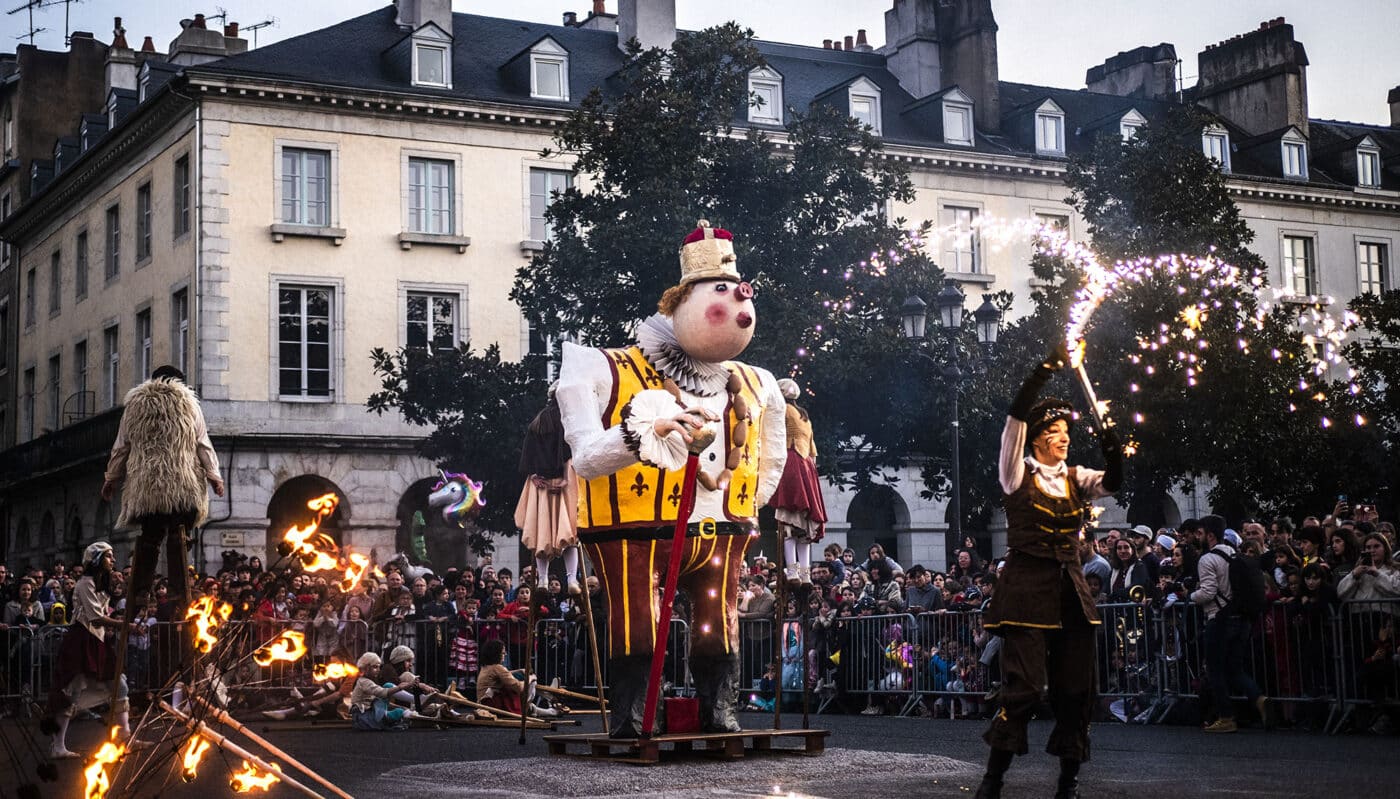
In Béarn, the Carnaval Biarnès brings Pau to life every year with its famous judgement and the cremation of San Pantzar, the scapegoat for all the ills of the past year. Songs, dances and social criticism punctuate this popular festival where the locals dress up in colorful costumes. In the Basque Country, the carnivals of Saint-Jean-de-Luz, Bayonne, Ustaritz and Tardets are the best-known and most popular. In Ciboure, the Sorgin Gaua celebrates the witches of Basque mythology with a night-time parade featuring song, dance and festive entertainment.

2 – Masquerades: a carnival ritual
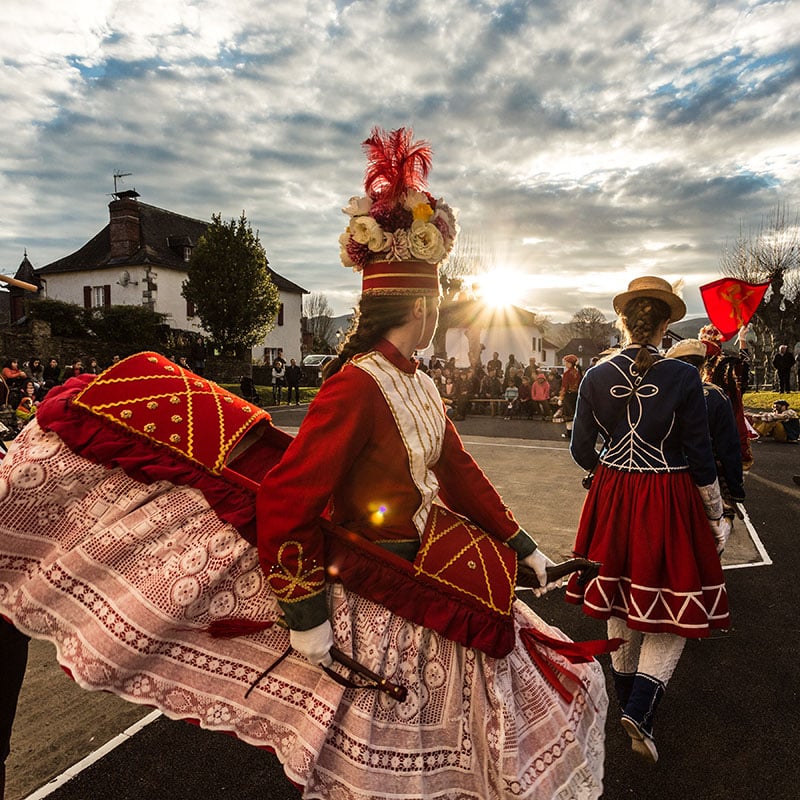
In Soule, one of the 7 provinces of the Basque Country, masquerades are traveling theatrical performances combining dance, music and satire. Each year, a Souletin village organizes the masquerade and tours the whole of Soule.
Identity card for a masquerade:
- Period: Sundays from January to April
- Location: In the villages of Soule in the Basque Country
- Highlights: parades, barricade dances, satirical sketches
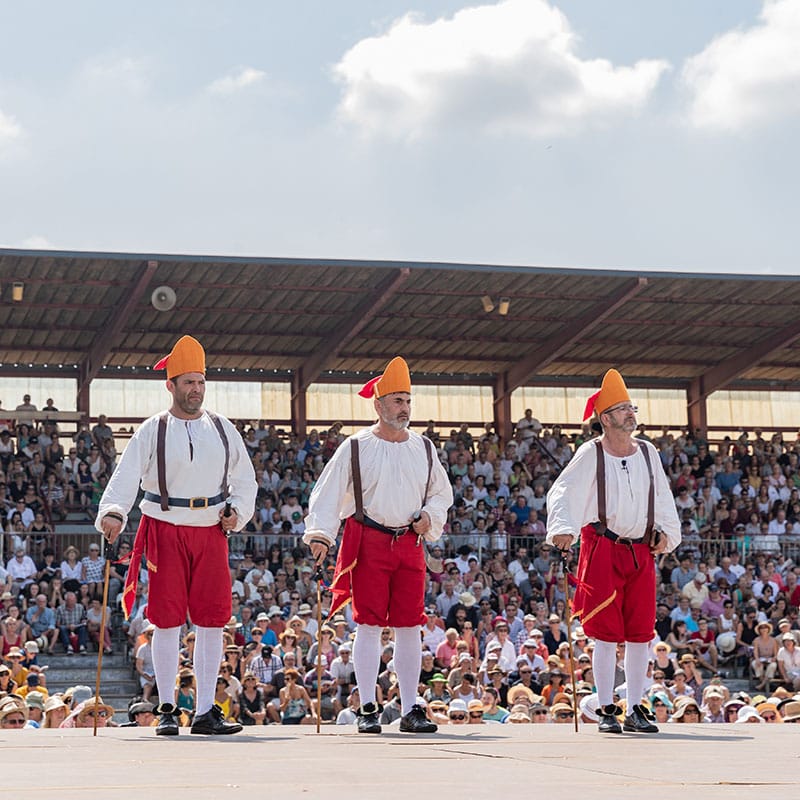
- Emblematic characters: the “Reds” (Gorriak) represent the good, with figures like the Zamalzain (horseman) and the Txerrero (guardian), and the “Blacks” (Beltzak) symbolize disorder, often disguised as beggars or grotesque figures.
- History: Established in the 19th century, masquerades almost disappeared after the Second World War, but have enjoyed a revival since the 1980s.
A day in the life of a masquerade:
In the morning, the troupe performs dances requesting permission to enter the village. After a convivial meal, the show begins around 4 p.m. in the village square, with codified dances such as the Godalet Dantza. This is followed by burlesque skits performed by the “Noirs” and the famous Pitxu, a character who dies and is reborn under the mockery of the other roles. The day concludes with a collective dance that brings together audience and performers.
3 – Les Pastorales: popular open-air theater
A pastorale is a play sung in the Basque language, telling the story of a hero or an important event. The actors, all amateurs from the village, train for months to give a unique performance. It’s a real event that brings the whole community together and attracts many visitors.
Pastoral care identity card :
- Period: Generally in summer
- Location: In the villages of Soule in the Basque Country
- Highlights: An open-air theatrical performance lasting 3 to 4 hours
- Emblematic characters: “Blue” actors (the good guys) and “red” actors (the naysayers), angels, satans
- History: Tradition dating back to the 15th century, heir to medieval theaters
A pastoral day in action
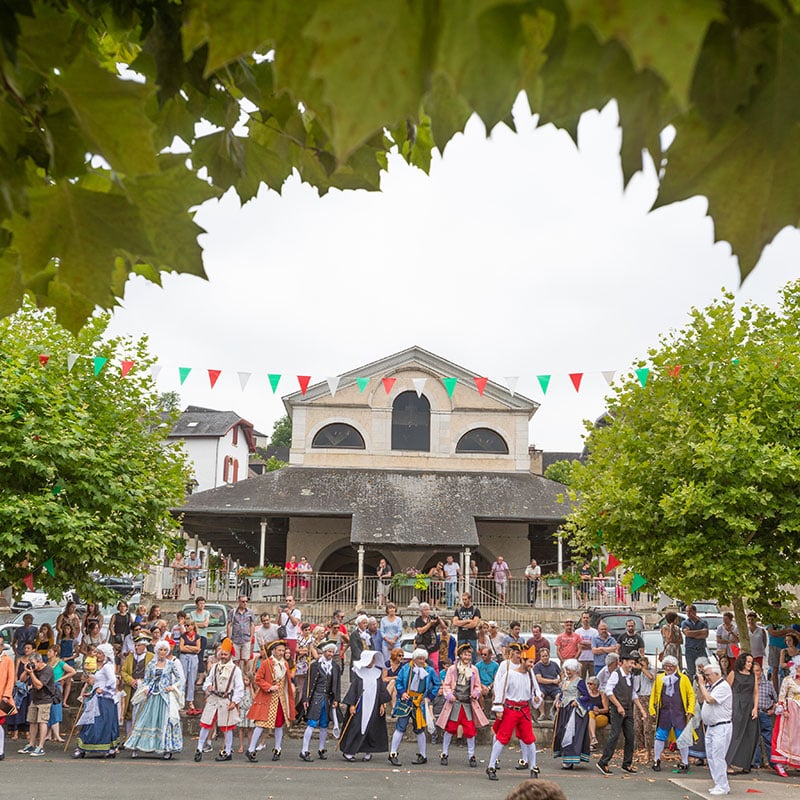
The day begins with a Basque mass, followed by a parade of actors in traditional costumes through the organizing village. In the afternoon, the performance takes place outdoors on a soberly decorated stage, marked by the opposition between the “blues”, figures of good, and the “reds”, representatives of evil. The show recounts the life of a historical or mythical figure through codified song and dance, directed by the errejent, who is responsible for the staging and ritual movements.
A bilingual Basque-French booklet is included, making it easy for everyone to follow the dialogues.
4 – The year’s key events:
Events not to be missed:
- Sorgin Gaua in Ciboure February
- Saint-Jean-de-Luz Carnival February
- Bayonne Carnival February
- Carnaval Biarnés de Pau Late February
- Carnival in Tardets March
- Souletine masquerades : January to April
- Pastorales souletines July and August
Fêtes et Manifestations
There are no results for your search. Feel free to modify your search criteria.