
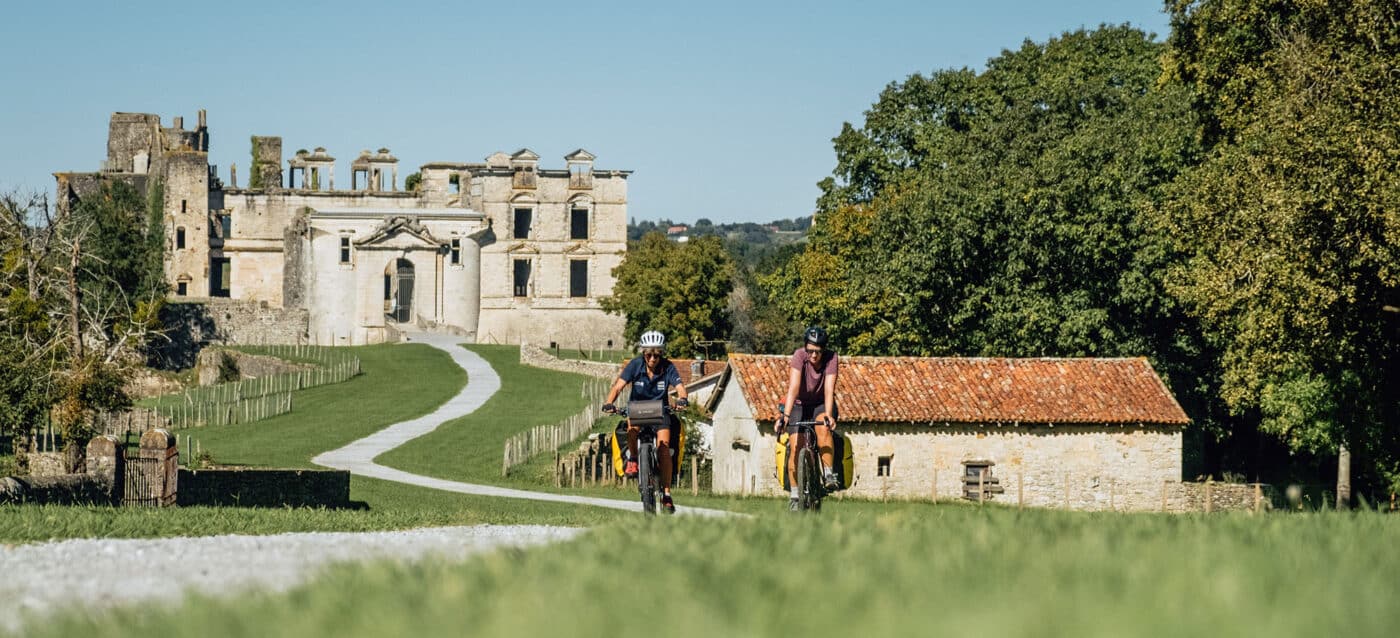
From Urt to Roncesvalles, follow the Scandibérique in the Basque Country
The Scandibérique in the Pyrénées-Atlantiques takes you from Urt to Saint-Jean-Pied-de-Port before crossing the Pyrenees to Roncesvalles, in Spain. Here, EuroVelo 3 gradually changes its face: the peaceful banks of the Adour and Bidouze give way to the hills of Lower Navarre, the villages crossed by the Camino de Santiago, then the slopes of the Pyrenees. Three stages, 119 km, and a terrain that rises to a crescendo. Do you like cycling trips with a bit of a challenge, lots of landscapes and a real story to follow? In the saddle!
Scandibérique in a few figures
- – More than 1,700 km by bike across France
- – The longest cycle route in France
- – 4 regions and 20 departments crossed
- – 48 stages on the French route
- – A route marked with the EuroVelo 3 ID
- – 3 stages presented in the 64, from Urt to Roncesvalles
- – 119 km accumulated over these three stages
- – Up to 930 m of elevation gain on the Saint-Jean-Pied-de-Port–Roncesvalles stage
The 3 stages of the Scandibérique from Urt to Roncesvalles
We start along the water, almost quietly. Then the hills appear, the Pyrenees take up more and more space in the landscape and the calves understand the program! From Urt to Roncesvalles, the Scandibérique crosses Lower Navarre and crosses several historic paths to Santiago de Compostela. A sporty itinerary where heritage, nature and a taste for travel move in the same direction.
Why travel the Scandibérique in the Basque Country?
The Scandibérique follows a territory shaped for centuries by travel, trade and the paths to Santiago de Compostela.
We drive along the banks of the Adour and the Bidouze, we cross old river ports, then we find in Saint-Palais and Ostabat the traces of the great Jacobean roads. Further on, the houses of Lower Navarre, the frontons and the small villages take over before arriving in Saint-Jean-Pied-de-Port.
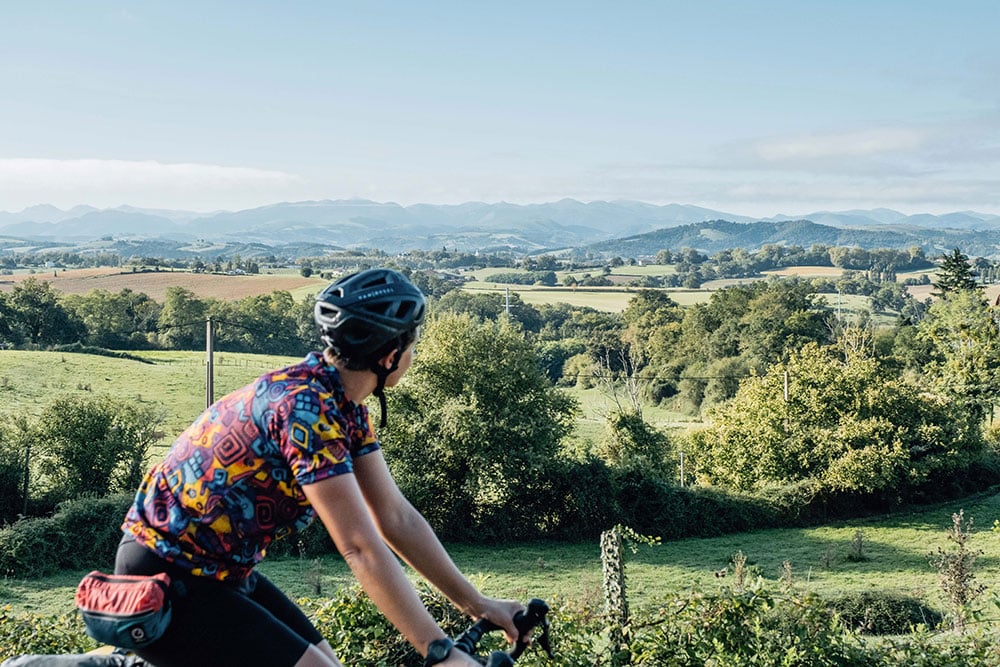
And in the meantime, the Pyrenees are getting closer. Slowly at first. Then frankly. Until the moment when you have to cross them to reach Spain. That’s the charm of this portion!
In the footsteps of the Camino de Santiago de Compostela
It is difficult to travel through this part of the Scandibérique without feeling the influence of Santiago de Compostela.
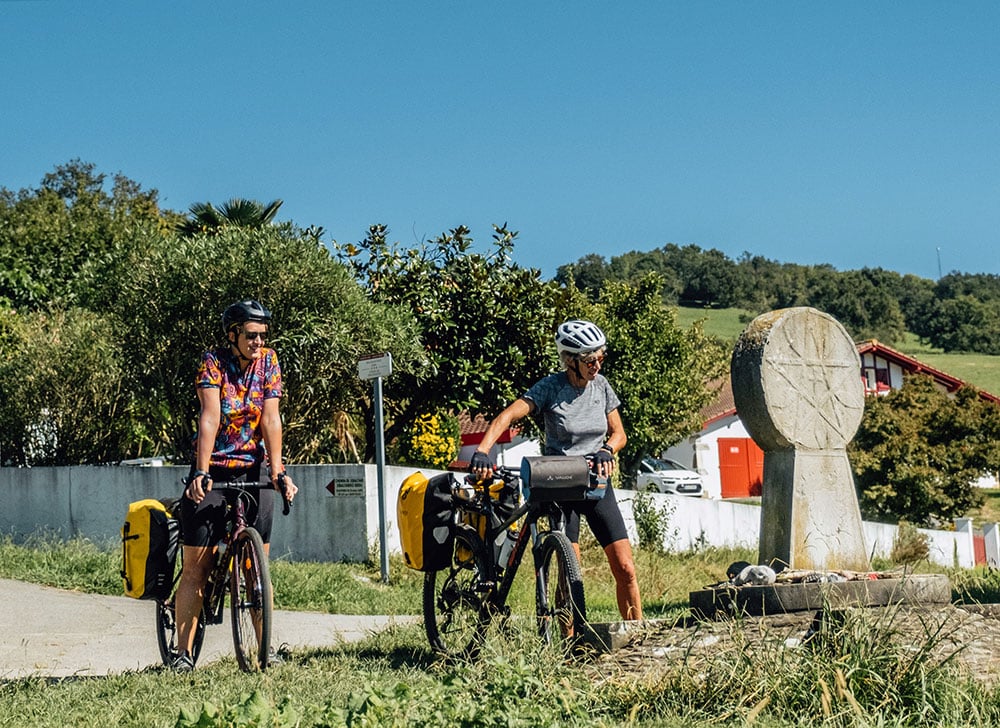
Near Saint-Palais, the Gibraltar stele marks the convergence of several major historical Jacobean routes. Ostabat was also an important stop for pilgrims and travellers heading to the Iberian Peninsula. In Saint-Jean-Pied-de-Port, the Porte Saint-Jacques in turn recalls this history of the long-distance journey.
By bike, we sometimes share the road – or at least the spirit of the journey – with walkers from here and elsewhere. A little hello, a wave of the hand… and everyone resumes their journey at their own pace
Where to sleep on the Scandibérique?
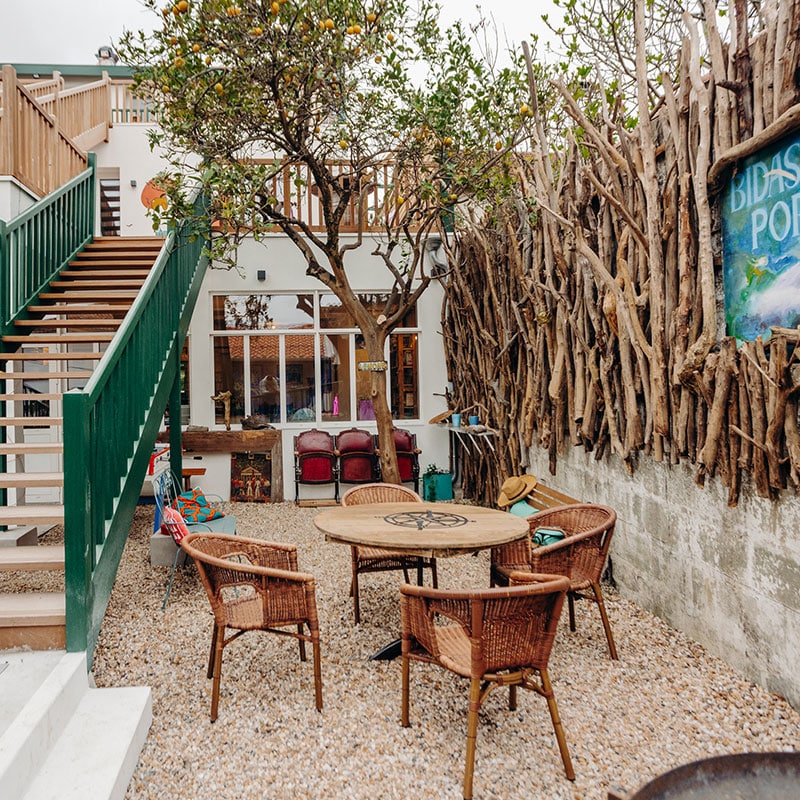
Think about Accueil Vélo accommodation
After the miles and the difference in altitude, finding accommodation suitable for a bike trip is frankly part of the fun.
The establishments labelled Accueil Vélo are located less than 5 km from the Scandibérique and offer services adapted to cyclists. Accommodation, bike rental and repairers, restaurants, tourist offices or tourist sites can join this national network.
The right reflex? Scout out your stages before you set off, especially before the most sporty days towards Saint-Jean-Pied-de-Port and the Pyrenees.
Other establishments with the Accueil Vélo label:
Prepare your trip to the Scandibérique in the 64
Here, the further you go towards the Pyrenees, the more the relief is felt. A few tips to help you prepare:
- Download the GPX tracks before your departure.
- Adapt your stages to your physical condition: the level increases significantly after Saint-Palais.
- Consult the points of vigilance indicated on each Tourisme64 sheet.
- Have enough water and snacks between two steps.
- Pack what you need to make small repairs.
- An electrically assisted bike can make the hilliest stages easier.
- On shared roads, be particularly vigilant about traffic.
- Take the time to stop in the villages you pass through: heritage is an integral part of the trip.
 ©Timothée Buisson
